Wondering if that beautiful acreage near Battle Ground is really as simple as it looks? A few open pastures, a shop-sized clearing, and room to breathe can be incredibly appealing, but rural and semi-rural property often comes with more questions than a standard neighborhood home. If you are thinking about buying acreage near Battle Ground, this guide will help you understand the details that matter most before you commit. Let’s dive in.
Start With Jurisdiction and Legal Lot Status
One of the first things to confirm is where the property actually sits from a land-use standpoint. Acreage near Battle Ground may be inside city limits, inside Battle Ground’s urban growth area, or in rural Clark County. That matters because zoning and development rules can differ depending on which jurisdiction applies.
Clark County explains that land inside a city’s urban growth boundary is considered urban, while land outside that boundary is rural. Once you know the property’s location, you can look at zoning to understand allowed uses, setbacks, lot size requirements, and other development standards. This is a foundational step because it shapes nearly every other decision you may make about the property.
Clark County’s official starting points for parcel research are the Property Information Center and MapsOnline. These tools can show zoning, recorded plats, permit history, contour lines, and map layers related to wells, septic, water, and other parcel details. The county also uses this system for zoning verification, so it is one of the best places to begin your due diligence.
Just as important, do not assume a tax parcel is automatically a buildable legal lot. Clark County notes that a parcel must be a legal lot of record to be divided, and while many parcels do qualify, that is something you should verify directly. If you think you may want to divide the land later, that question should be answered early.
Ask Whether Future Division Is Realistic
Many acreage buyers think ahead. You might be wondering whether you can split off part of the property in the future, create space for another home, or preserve long-term flexibility for your family. That is a smart question, but the answer depends on more than parcel size.
In Clark County, rural land divisions of four lots or fewer are handled as short plats, while five or more lots are subdivisions. Legal lot status is part of that analysis, but zoning, access, environmental constraints, and infrastructure also matter. A parcel that looks large on paper may still have limitations that affect future division potential.
This is where calm, upfront research can save you from disappointment later. If future land division is part of your goals, treat it as a fact-finding step, not an assumption. It is much easier to confirm possibilities before you buy than to discover restrictions after closing.
Understand Water Before You Fall in Love
Water service can look very different from one Battle Ground-area property to the next. Some homes inside Battle Ground may be served by the city’s water system. The city says it operates 71 miles of water lines and 8 wells and pumps, with services and rates managed through its Utilities Department.
Other properties may be outside city service areas. Clark Public Utilities provides water to about 17% of Clark County, mostly in northwest areas, and notes that cities and towns such as Battle Ground operate separate systems. On more rural acreage, a private well may be the primary water source.
If a property has a private well, it is worth understanding what that means in Washington. Clark County Public Health reviews new private wells for water adequacy and availability. The Washington Department of Ecology says permit-exempt domestic wells are limited to domestic use up to 5,000 gallons per day, plus lawn and garden irrigation of a half-acre or less.
Ecology also states that permit-exempt wells are still subject to state water law and may be curtailed during drought emergency orders, except for indoor domestic use and small subsistence gardening. The agency further emphasizes that water is not a property right in Washington, and some areas may not have enough water available for new wells. For acreage buyers, that makes water supply a practical issue, not just a box to check.
Know Whether Sewer or Septic Applies
Wastewater is another big acreage question. In Battle Ground, the city says sewage moves through city infrastructure and is then owned and operated by the Discovery Clean Water Alliance, which also serves Ridgefield and parts of unincorporated Clark County. If a property is in or near established service areas, that may be straightforward.
Many acreage properties outside those areas rely on septic instead. Clark County says about 35,000 homes and businesses in the county use septic systems, so this is a common setup. Still, common does not mean maintenance-free.
Clark County states that septic inspection intervals are generally every 3 years for conventional gravity systems, every 2 years for pressure distribution systems, and every year for advanced systems. The county also provides online access to septic as-builts, permits, and past inspection records. Reviewing those records can tell you a lot about the system’s history and help you plan for future upkeep.
Clark County also notes that properly functioning septic systems help protect groundwater, which supplies about 98% of the county’s drinking water. For you as a buyer, that means septic care is both a property issue and a long-term stewardship issue.
Check Shops, Barns, and Other Structures Early
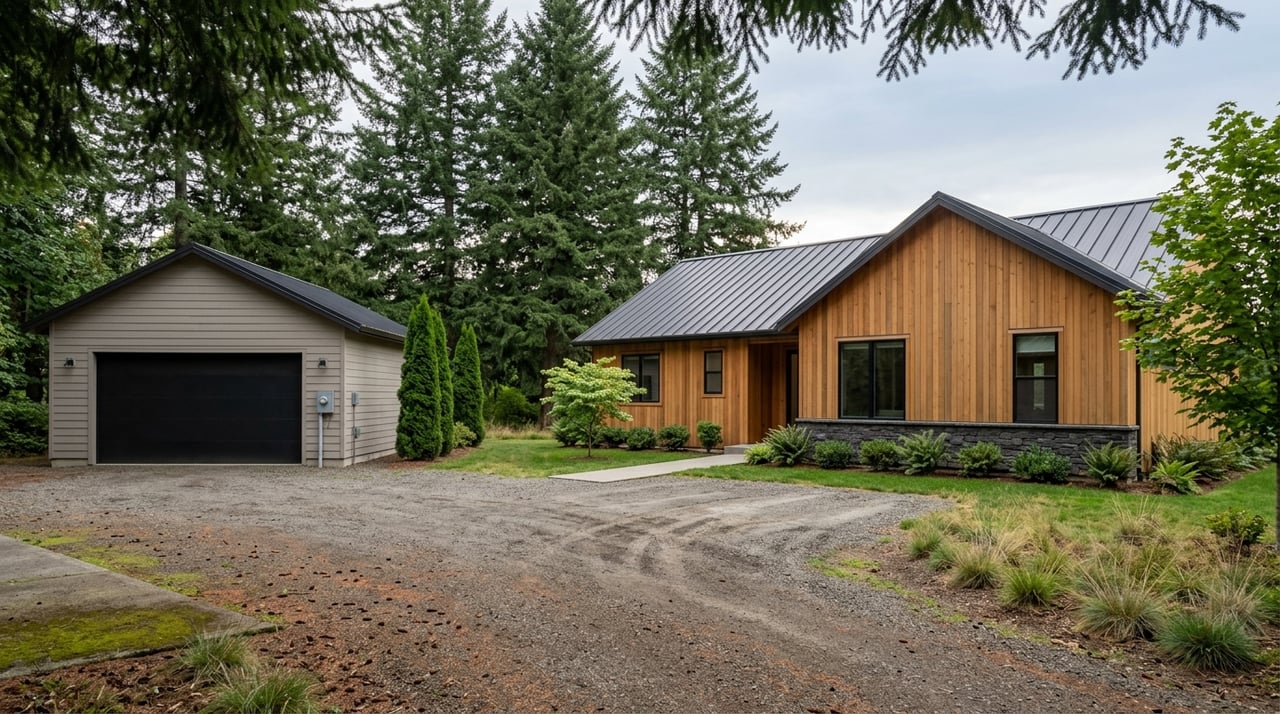
Acreage often appeals to buyers who want more than just a house. You may be picturing a large shop, a barn, extra garage space, a guest house, or room for hobbies and equipment. Those goals are worth exploring early because accessory improvements may require permits and must still fit local zoning rules.
Clark County’s residential permit guidance lists many structures and improvements as permit-relevant work, including new or converted garages, guest houses, shops, carports, patio covers, pools, and saunas. Small sheds of 200 square feet or less are typically permit exempt, but the county says they still must meet setbacks and easements. In other words, even a small improvement should not be placed casually.
If you want a shop, RV pad, or home office setup, confirm zoning and setback standards before assuming the property can support it. Clark County also notes that driveway changes, including a new driveway cut onto a county road, can require an approach permit. Access can be just as important as the building itself.
For farm-leaning or equestrian properties, the rules can be more nuanced. Clark County says exempt agricultural buildings may include barns, shelters, greenhouses, and storage for farm equipment, but those structures still need to comply with zoning and may require electrical, plumbing, or mechanical permits. The county also notes that equestrian uses can require additional land use approval and, in some cases, fire-flow requirements.
If you are thinking about adding a second dwelling, keep that question high level until you confirm the property details. Clark County has separate rural ADU rules, so a second unit is a zoning-and-permit question, not simply a design preference.
Look Closely at the Usable Acreage
One of the most important questions with acreage is not just how many acres there are, but how much of that land is actually usable. A parcel may look generous in the listing, yet the buildable or practical area may be smaller once you account for wetlands, floodplain, slopes, soils, easements, and access.
Clark County’s wetland and habitat review process relies on map layers and screening tools such as hydric soils, wetland inventories, species maps, streams, lakes, rivers, floodplain maps, and aerial imagery. The county also makes clear that these are screening tools only. Regulatory decisions are based on site-specific determinations, which is why a pre-determination can be useful before you spend heavily on design or move too far into a purchase.
A pre-determination can help identify approximate boundaries, buffer sizes, and acceptable building envelopes. That kind of information can be especially helpful if you are comparing two acreage properties that seem similar on paper but may have very different development flexibility. It can also help you avoid overestimating what the land can support.
Flood risk matters too. Clark County says floodplain review is intended to notify buyers if a property is located in a flood hazard area, and it defines the regulatory base floodplain as the 100-year floodplain where floodplain regulations apply. If part of a parcel falls in this area, that may affect siting, permitting, and how you think about future improvements.
Pay Attention to Access, Slope, and Site Layout
The feel of a property often comes down to site layout. A parcel with good road access, usable topography, and a clear building area may offer much more flexibility than a parcel with steep slopes, fragmented access, or heavily constrained land. These details can affect both your day-to-day use and your long-term costs.
Clark County says lot reconfiguration decisions consider road access, septic suitability, topography, infrastructure costs, and sensitive land. In practical terms, that means easy access and more usable dry ground often create more options. On the other hand, wetlands, floodplain, steep slopes, poor soils, or limited access can reduce flexibility and add permitting complexity.
The county also warns that environmental conditions and the wildland urban interface may affect setbacks. Before you close, it is wise to review contour lines, driveway placement, recorded easements, and site slope. These are not minor technical details. They shape what the land can realistically do for you.
Use a Smart Due Diligence Workflow
Acreage purchases go more smoothly when you follow a simple research process. Instead of trying to answer every question at once, start with the parcel basics and build from there. That approach helps you stay grounded and make decisions with more confidence.
A practical workflow in Clark County looks like this:
- Pull the parcel fact sheet
- Confirm zoning and recorded plat information
- Review permit history
- Check environmental layers
- Review well records, if applicable
- Review septic records, if applicable
- Ask about water, sewer, or access-related approvals for future plans
Clark County notes that if you plan to build, add, or significantly remodel, related approvals such as new water or sewer connections and road approach permits may be folded into residential permit packages. That is helpful to know if you are buying acreage with future improvements in mind.
Why Local Guidance Matters With Acreage
Buying acreage near Battle Ground can open the door to privacy, flexibility, and a lifestyle that feels harder to find on a standard neighborhood lot. It can also bring more moving parts than many buyers expect. The key is not to be intimidated by those details, but to respect them early.
When you ask the right questions up front, you can better understand whether a property fits your plans today and still supports your goals years from now. That includes legal lot status, utilities, usable land, environmental constraints, access, and the rules around future structures. The more clearly you see the full picture, the more confidently you can move forward.
If you are considering acreage near Battle Ground and want calm, local guidance through the details, Chaney Compher can help you evaluate land, homes, and rural properties with a steady, informed approach.
FAQs
What should you verify first before buying acreage near Battle Ground?
- Start by confirming the property’s jurisdiction, zoning, and whether it is a legal lot of record through Clark County’s parcel research tools.
How can you tell if acreage near Battle Ground is on well and septic?
- Review parcel records and utility information to determine whether the property is served by city systems, another provider, a private well, or a septic system.
Can you add a shop or barn on acreage in Clark County?
- Possibly, but you should verify zoning, setbacks, and permit requirements first because many accessory structures and agricultural buildings still require code review.
Do wetlands or floodplain affect Battle Ground-area acreage?
- Yes, wetlands, habitat areas, and flood hazard areas can reduce usable land and affect where you can build or place improvements.
Can acreage near Battle Ground be divided later?
- It depends on legal lot status, zoning, access, environmental constraints, and other county requirements, so future division should always be researched before you buy.
Why do septic records matter when buying acreage in Clark County?
- Septic records can show system type, permits, as-builts, and inspection history, which helps you understand maintenance needs and potential issues.